
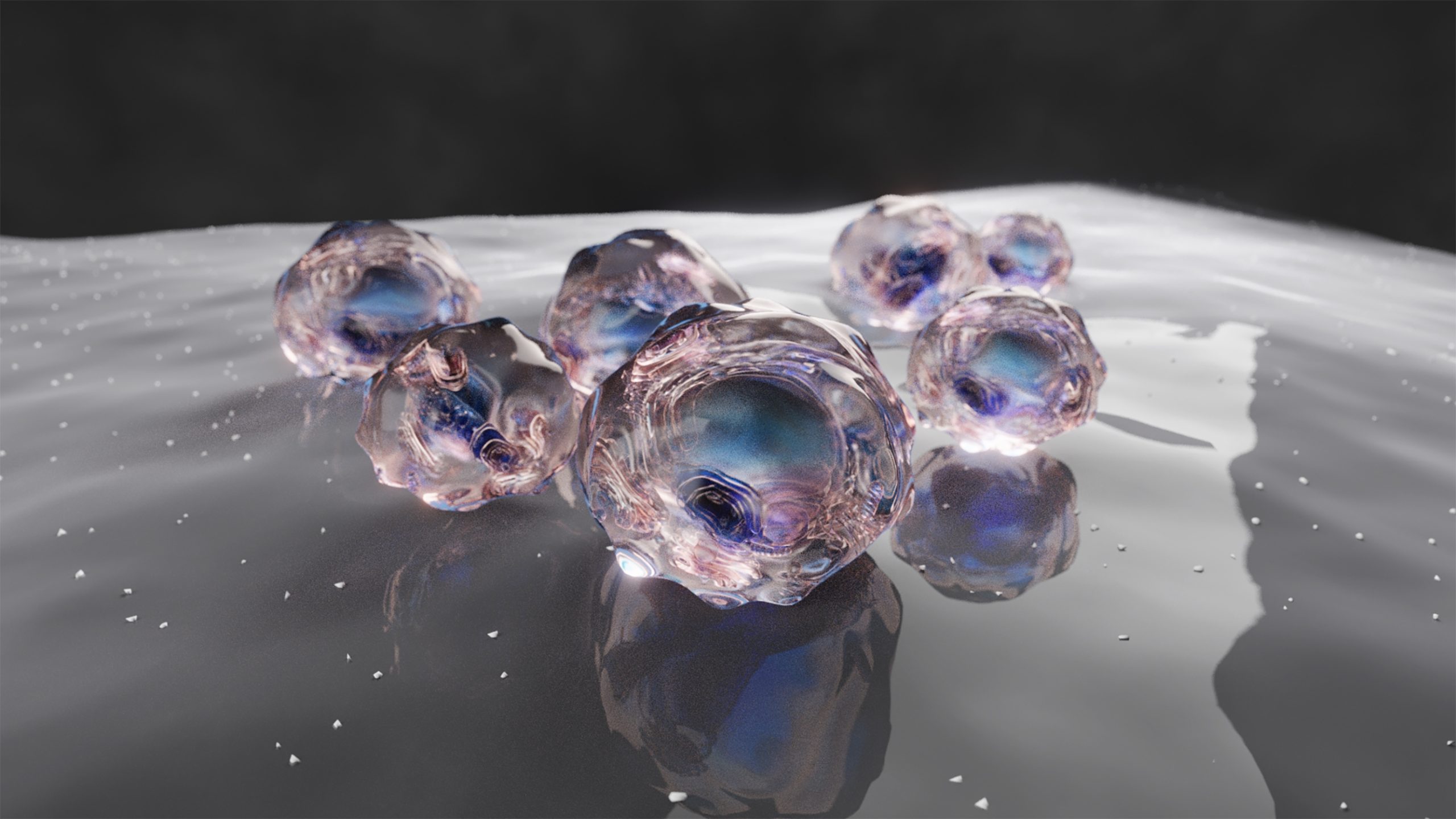

Nabiha Saklayen, CEO of Cellino, was born in Saudi Arabia and raised partially in Germany and Sri Lanka. From a young age, she was encouraged and inspired by her mother, the first female in her family to attend university. Nabiha took a special interest in the cosmos and astrophysics because she loves a challenge, and found those subjects to be more difficult than chemistry and biology. In Nabiha’s senior year, she received a full scholarship to Emory University, to major in Physics and minor in Mathematics.
A turning point in Nabiha’s academic career was when she lost her grandmother to diabetes at age 22. She realized that medicine still has a long way to go, and looking at biology through the lens of physics and mathematics allowed her to see things differently. So, after graduating from Emory, she shifted her focus from astrophysics to biophysics, studying for her PhD at Harvard’s Graduate School of Arts and Sciences.
It was at Harvard that she began developing laser-based methods to deliver cargo to cells. When Nabiha started learning about induced pluripotent stem cells, iPSCs, she was fascinated by their applications and conceived the idea behind her startup, Cellino, soon after. She named her company Cellino as a nod to her former obsession with the cosmos, derived from Celaeno, a part of the Pleiades star cluster. Her company officially launched in 2017, with a focus on eliminating abhorrent cells in iPSC cultures.
In 2020, Cellino was named “Most Intriguing Newcomer” by Forbes. Nabiha attributes this to the cross-departmental functionalities of her team, being founded by 3 laser physicists and employing scientists with distinct expertise in fields like stem cell biology, optical engineering, software learning engineering, and more.
The Technology
Cellino’s label-free imaging allows for the monitoring and alteration of stem cells at various stages in their development. With label-free imaging, the monitoring of the stem cells is non-invasive and can be used in every phase. Due to their constant monitoring, patterns of cells that do not convert can be studied, and eliminated, and the data collected is then used to better the model.
Often, induced cells do not become pluripotent. These cells need to be removed from the sample in order to proceed with the specialization of the iPSCs into nervous tissue or retinal cells, for example. The previous method for removing the cells that failed to convert was by a scientist physically scraping out any cells from the culture, using a pipette, that did not successfully convert into stem cells. This was very time-consuming, taking up to 4 months per sample, creating a huge bottleneck in the large-scale production of personalized stem cells.
Using single-cell laser targeting and AI recognition, the elimination of non-functional cells can proceed rapidly and without an increase in manpower. The AI technology uses visual patterns to recognize and execute what needs to be changed within the sample, rather than pipetting them out and writing notes.
The processes that follow cell removal are also automated, like transport, incubation, and handling. Most sanitization practices are not perfect, but when completed by machines, it is possible. This closed system allows for perfect sterilization because it all happens without physical human contact or intervention. Using machine learning, AI technology executes perfect data collection and automatically self-improves, learning from what works and what does not. This is what gives Cellino the scalability advantage, minimal human interaction, perfect pattern recognition, and intelligently designed machine-learning models.
The Future
On the horizon, Cellino’s scientists see a cure for Macular Degeneration and Parkinson’s. Over the next ten years, they hope to begin working on cures for diabetes, heart disease, and more. Another challenge they are facing is lowering the cost of production so that these therapies can be available commercially, and making them accessible for lower-income patients.
This proposed reduction in cost will come in the form of improving their production processes so that several cell cultures, from distinct patients, can be created and refined at once without cross-contamination. The technology that they are working on to achieve that goal is a “closed-cassette” system, which they hope to employ by 2025.
Cellino is currently making strides toward regulatory approval with the FDA. Other stem cell companies have been successful in working with regulatory agencies and seeing positive outcomes in clinical trials, which is a big step in the right direction. Cellino has established several sources of funding, with infusions from Bayer, 8VC, and Humboldt Fund to develop manufacturing capabilities and move into the clinical trial phase.