
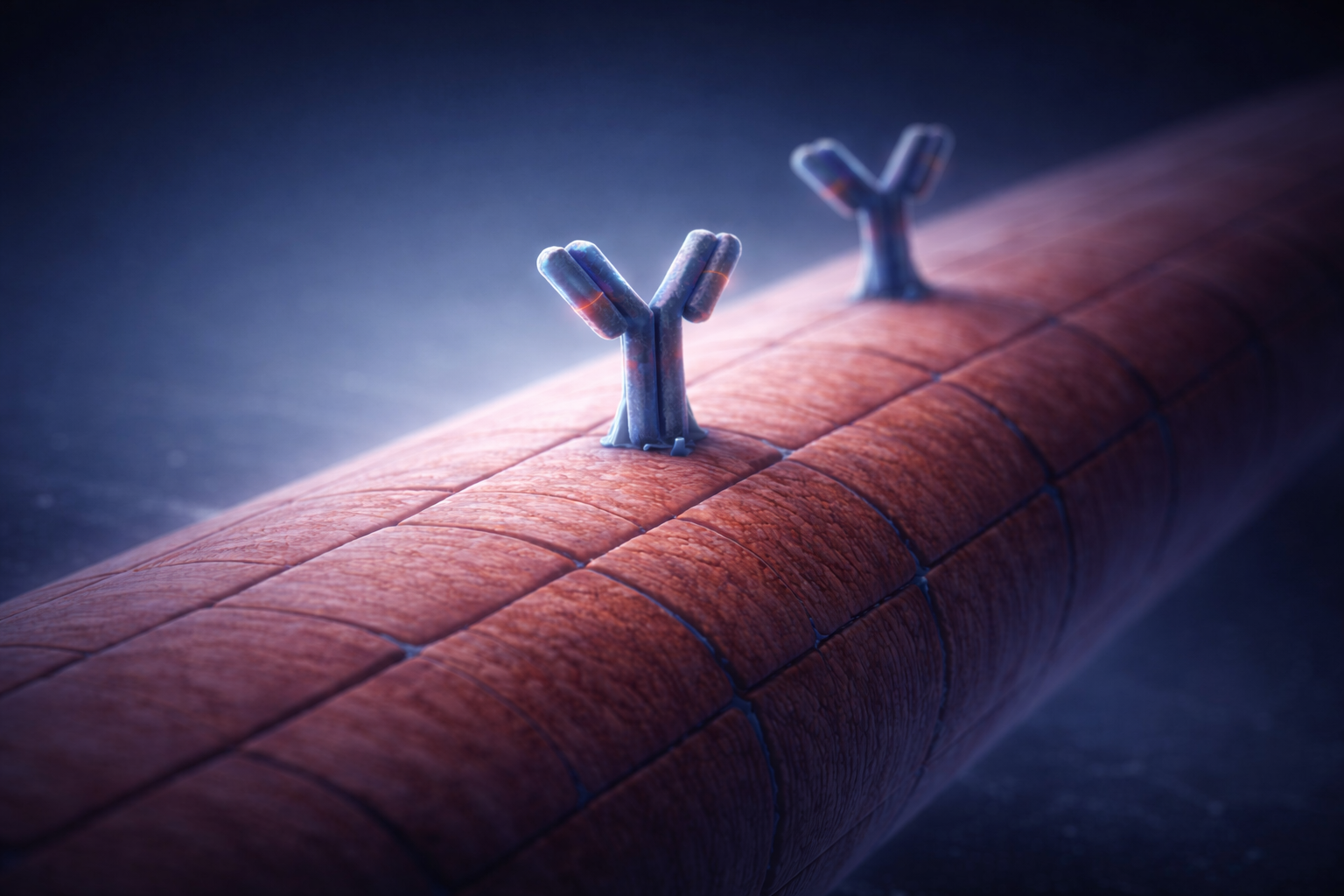

When Novartis agreed to acquire Avidity Biosciences for approximately $12 billion, it did more than stand as one of the largest RNA-focused acquisitions in recent years. The transaction sent a strong validation signal for antibody-oligonucleotide conjugates (AOCs) as an emerging modality—and cemented CEO Sarah Boyce’s status as one of the most prominent female leaders in modern biotechnology. In an industry long challenged by the delivery problem of RNA medicines, Avidity’s success reframed the conversation. Rather than asking whether oligonucleotides can reach muscle, the field is now asking how broadly AOC technology can be applied across neuromuscular and systemic diseases.
From Clinical Signal to Regulatory Momentum
By 2025, Avidity had reached an inflection that few RNA companies achieve: converging clinical, regulatory, and platform-level validation. Its lead program, del-zota (targeting exon 44 skipping in Duchenne muscular dystrophy), has reported increases in dystrophin production and exon skipping consistent with the therapeutic logic of reading-frame restoration via exon skipping in DMD (and broader clinical/biologic context in Niks & Aartsma-Rus). FDA engagement culminated in a positive pre-BLA meeting in October 2025, and company guidance has indicated a planned BLA submission in 2026. Beyond a single asset, 2025 became a year of regulatory dialogue around platform consistency, a prerequisite for any modality aspiring to scale. As regulators increasingly evaluate chemistry and delivery classes—not just individual drugs—Avidity’s discussions suggested the company is working to establish AOCs as a repeatable therapeutic framework.
Antibody-Mediated RNA Delivery to Muscle
The core innovation behind Avidity’s rise lies in a deceptively simple premise: borrow the targeting precision of antibodies to deliver oligonucleotides where they have historically failed to go—skeletal and cardiac muscle. AOCs link a monoclonal antibody, often directed at transferrin receptor 1 (TfR1), to an antisense oligonucleotide payload. This design exploits receptor-mediated endocytosis, improving tissue uptake compared with naked ASOs and enabling muscle exposure in higher species in peer-reviewed translational work on anti-TfR1 antibody–oligonucleotide conjugates delivering oligos to skeletal muscle in mice and non-human primates. Critically, Avidity’s platform still confronts one of RNA therapeutics’ most stubborn barriers: endosomal escape. While the field continues to optimize this step, most internalized RNA therapeutics remain endosomally trapped, with only a small fraction reaching the cytosol/nucleus to drive pharmacology—making endosomal escape a core rate-limiting challenge.
Neuromuscular Focus, Platform Breadth
As of 2025, Avidity’s pipeline spans multiple high-value neuromuscular indications:
Duchenne Muscular Dystrophy (DMD): Programs targeting exon 44 and other deletions map onto a clinical framework where dystrophin restoration is treated as a key biological endpoint, with functional measures and biomarker interpretation discussed extensively in peer-reviewed literature on exon-skipping therapies and DMD endpoints. Facioscapulohumeral Muscular Dystrophy (FSHD): AOCs designed to modulate DUX4-linked biology sit within a disease model where DUX4-induced gene expression signatures are a major molecular hallmark in affected muscle. Biomarker translation remains challenging; transcriptomic signatures can be variable across tissue and time. Myotonic Dystrophy Type 1 (DM1): RNA-targeting strategies for toxic repeat biology build on a deep antisense foundation, including evidence that advanced oligo conjugation approaches can drive durable molecular and functional correction in DM1 models. Across programs, consistent dosing logic, pharmacokinetics, and biomarker response—where demonstrated—support the argument that AOCs can behave as a coherent platform rather than a one-off success.
Delivery vs. Payload
Avidity’s ascent reshaped the competitive hierarchy in RNA therapeutics for muscle disease: Sarepta Therapeutics (PMO exon skipping) relies on PMO chemistry with established exon-skipping biology and long clinical history. Dyne Therapeutics (muscle-targeted conjugates) pursues conjugate-enabled delivery strategies. Wave Life Sciences and Ionis Pharmaceuticals bring deep oligonucleotide expertise, yet the strategic distinction remains: while many competitors optimize payload chemistry, Avidity’s bet is that delivery biology—particularly consistent muscle targeting—can expand the reachable therapeutic index.
Scaling the Modality
RNA therapeutics often stumble not in discovery, but in manufacturing complexity. As modalities diversify into conjugates and multi-component constructs, the development, analytical control, and delivery/manufacturing challenges that grow with complexity . With a multiyear cash runway prior to acquisition and a push toward scalable CMC, the company reduced a major historical overhang for conjugate modalities: reproducible, cost-conscious manufacturing at late stage.
What Still Matters Post-Validation
Even with validation, AOCs carry risks. Immunogenicity with repeated biologic dosing, long-term safety of chronic splice modulation, and CMC reproducibility for conjugates remain active areas of scrutiny. Looking ahead, the milestones that matter most are not incremental efficacy gains, but cross-program consistency: similar safety profiles, predictable pharmacology, and transferable manufacturing processes. If those hold, AOCs could extend beyond neuromuscular disease into cardiology, metabolic disorders, and CNS indications. In that sense, Avidity’s 2025 story is less about a single acquisition and more about a turning point for RNA therapeutics. Delivery, long the field’s Achilles’ heel, may finally have found a scalable answer—and it arrived through a platform led by one of biotech’s most consequential female CEOs.