
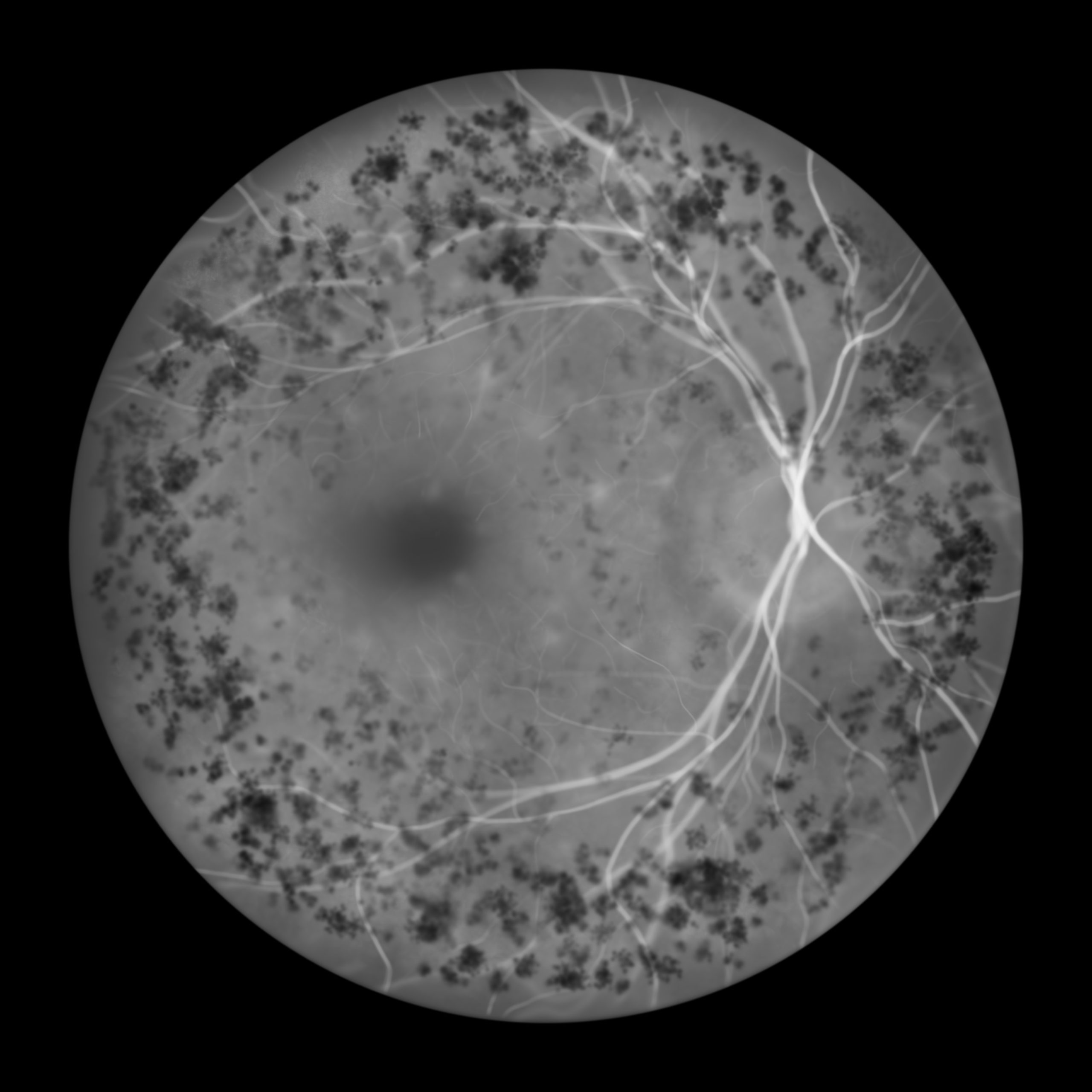

Gene therapy for inherited blindness first reached mainstream medicine by following a straightforward principle: fix a broken gene while enough retinal cells remain to benefit. That logic underpinned the pivotal clinical evidence for voretigene neparvovec (Luxturna) in RPE65-mediated retinal dystrophy, where gene replacement could improve functional vision in appropriately selected patients. However, in late-stage retinal degeneration, the biology changes. When photoreceptors are profoundly lost—as in advanced retinitis pigmentosa (RP)—replacing a gene in cells that are already gone offers diminishing returns. That is the therapeutic gap Nanoscope Therapeutics is trying to close: restoring functional vision by making surviving retinal neurons responsive to light again.
Led by CEO Sulagna Bhattacharya, Nanoscope is advancing what it positions as a leading ambient-light optogenetic gene therapy program, anchored by MCO-010, with late-2025 data that carries both clinical and emotional weight: long-term safety.
2025 milestones
On November 4, 2025, Nanoscope reported five-year safety results from EXTEND, its Phase 1/2a long-term follow-up study for MCO-010 in advanced RP. The company stated that a single intravitreal injection was safe and well-tolerated over five years, with no serious adverse effects or new safety signals, and reported quality-of-life improvements over the same period. In the same communication stream, Nanoscope has described a rolling Biologics License Application (BLA) process as “underway” for RP. And in August 2025, the company highlighted in published Phase 2 Stargardt data.
Optogenetics, but engineered for ambient light
Optogenetics aims to restore vision not by rescuing photoreceptors, but by re-introducing light sensitivity into downstream retinal circuits. In human medicine, optogenetics crossed from theory to reality with the widely cited report of partial recovery of visual function in a blind patient after optogenetic therapy, where stimulation required specialized goggles. Nanoscope’s differentiator is its claim of ambient-light activation—reducing reliance on high-intensity stimulation and hardware. The company describes MCO-010 as a “one-time, in-office, intravitreal injection” intended to provide durable restoration of vision while fitting existing retina specialist workflows, and it emphasizes broad eligibility. Scientifically, that positioning matters: the nearer a therapy fits standard ophthalmic practice (intravitreal injection, familiar monitoring), the more plausible the path to scale—if functional benefit is real and reproducible.
Modality comparison: where Nanoscope fits in the vision-restoration stack
Nanoscope operates in a crowded vision-restoration landscape, but the most useful comparison is modality-to-modality rather than company-to-company. Each approach to restoring vision addresses a different biological constraint and carries distinct clinical and commercial trade-offs.
Gene replacement therapy has proven transformative in the right biological context, but it is typically genotype-specific and depends on the presence of viable retinal cells to rescue. The clearest proof point was voretigene neparvovec (Luxturna), which showed clinically meaningful improvements in functional vision in patients with RPE65-mediated inherited retinal dystrophy in a pivotal Phase 3 trial published in The New England Journal of Medicine. The result validated retinal gene replacement as a therapeutic modality—while also highlighting its narrow window of applicability, limited to genotypes where enough viable photoreceptors remain to rescue.
Optogenetics takes a fundamentally different route. Rather than replacing a missing gene in damaged photoreceptors, it introduces light responsiveness into surviving retinal neurons, enabling vision even in advanced degeneration. Human feasibility has been demonstrated in late-stage retinitis pigmentosa, including partial functional recovery following optogenetic therapy paired with device-assisted stimulation.
Visual prostheses (retinal and cortical devices), including retinal and cortical implants, represent another pathway to vision restoration. These systems typically require implanted hardware and external components, introducing engineering trade-offs that affect resolution, usability, and durability. Against this backdrop, Nanoscope’s core commercial thesis is that a gene therapy delivered via a standard intravitreal ophthalmic injection could reach broader patient populations with lower procedural burden than implant-based approaches, provided functional benefit is robust and reproducible. The company’s lead retinitis pigmentosa program is currently being evaluated in a randomized controlled study.
What actually determines late-stage credibility
By late stage, optogenetics succeeds or fails on execution, not concept. The novelty question is largely settled. What remains is whether a tightly coupled system—vector design, dose, delivery, inflammation control, and endpoints—can generate functional benefit that holds up outside tightly controlled trials. Durability is the first filter. Long-term safety is expected; the harder question is whether functional gains persist and reproduce across patients rather than clustering in early responders, a pattern that has complicated multiple inherited retinal disease programs over the past decade. Inflammation is the second constraint. Intravitreal gene therapies routinely trigger immune responses that may be manageable in specialized trials but are harder to standardize at scale as programs move beyond expert centers and into routine practice, a risk profile well described in ocular gene therapy development. Endpoints are the third—and often decisive—factor. In advanced retinal degeneration, endpoint choice can determine whether a trial succeeds at all, particularly when regulators scrutinize whether reported improvements reflect usable vision rather than narrow visual signals, as outlined in recent analyses of low-vision clinical trials. There will be no “next Luxturna moment” driven by elegant biology alone. Late-stage credibility depends on functional gains that are durable, reproducible, and interpretable by clinicians treating profoundly impaired patients.
When acuity stops being the signal
That context matters because in advanced retinal degeneration, standard visual acuity often fails as a meaningful readout. Asking whether a patient can read an eye chart can miss the earliest—and most relevant—signals of benefit altogether. Nanoscope’s retinitis pigmentosa program reflects that shift. Rather than anchoring solely on acuity, its controlled studies of MCO-010 emphasize functional performance measures designed to capture how patients interact with their environment, as reflected in its ongoing randomized clinical study. One of those measures is multi-luminance mobility testing, which evaluates whether patients can navigate real-world environments across varying lighting conditions. In late-stage disease, mobility often captures meaningful change earlier—and more reliably—than chart-based acuity. Another is full-field stimulus threshold (FST), a whole-field light-sensitivity measure that becomes particularly useful when fixation-dependent testing is no longer reliable. This distinction is central to optogenetics. Early treatment effects may appear first as improved light detection, spatial awareness, or task performance rather than crisp chart gains. Whether those signals convince regulators and clinicians is what ultimately determines whether optogenetics moves from experimental promise to commercial reality.
