
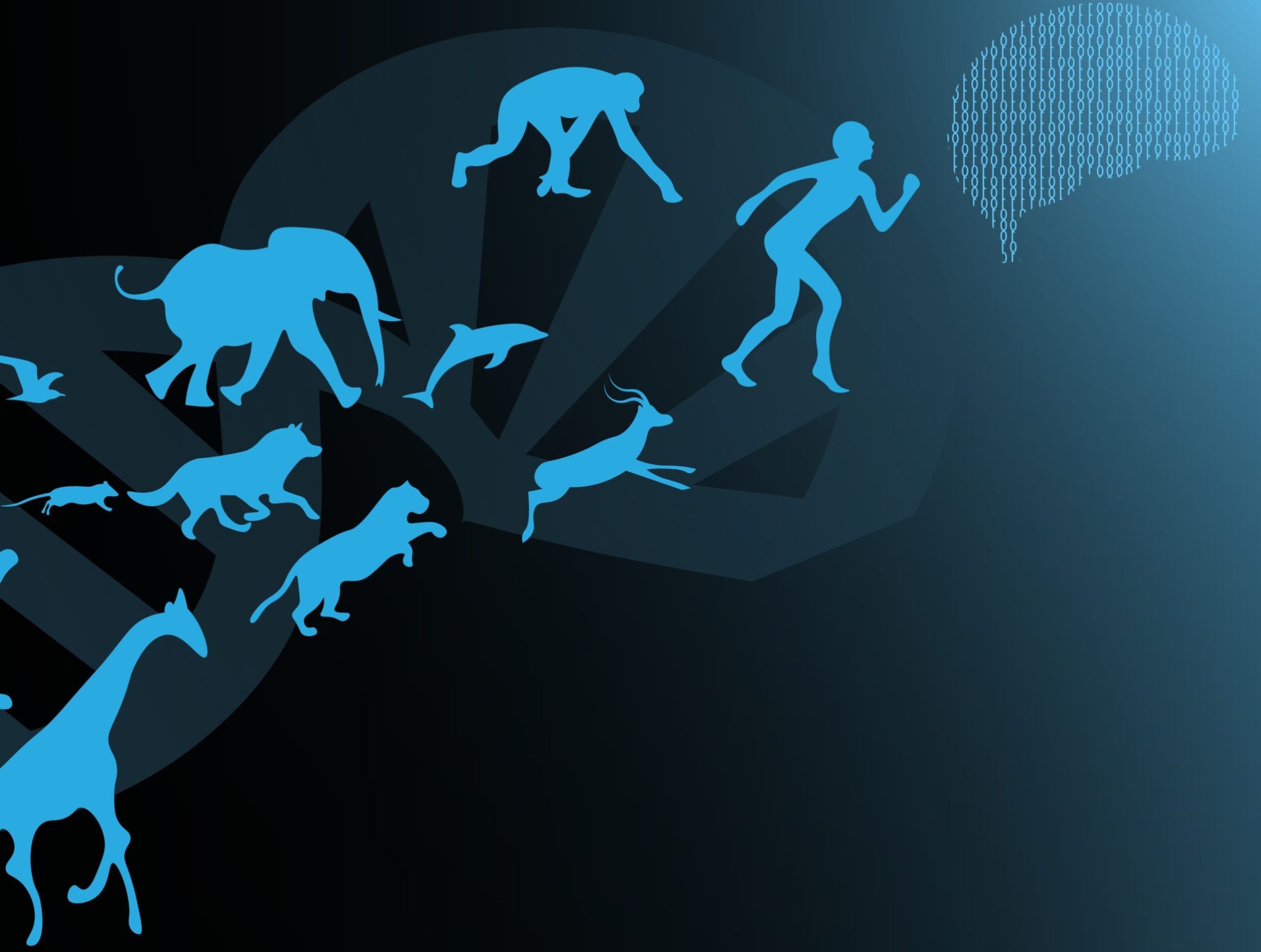

Imagine waking up after five months of deep sleep — your heart beating just a handful of times per minute, your body temperature hovering just above freezing — and stepping outside feeling completely fine. No muscle loss. No organ damage. No cognitive fog. That is not a science fiction premise. That is Tuesday morning for a 13-lined ground squirrel in the American Midwest.
Ashley Zehnder noticed this and asked a question that most researchers hadn’t thought to ask: if a squirrel’s heart can survive conditions that would kill a human, what does it know that we don’t? It was the kind of question that could only come from someone who had spent her career looking at biology from multiple angles — first as a veterinarian specializing in avian medicine, then as a cancer biologist earning her Ph.D. from Stanford. That unusual combination gave her a perspective most drug researchers simply don’t have: where conventional scientists focus almost exclusively on human cells and mouse models, Zehnder was drawn to a broader question — across all of nature’s mammals, which ones resist the very diseases that kill humans, and how?
A bear doesn’t develop the muscle wasting that bedridden patients experience during long hospital stays, even though it barely moves for months. Dolphins can dive to crushing depths with no oxygen-related brain damage. The 13-lined ground squirrel can effectively stop and restart its cardiac function, season after season, with no lasting scarring. Zehnder’s insight was to follow the trail of evidence — to focus on animals where science had already established decades of data on disease resistance, and then ask whether those mechanisms could be unlocked for human medicine.
That question became Fauna Bio, co-founded in 2018 alongside Dr. Linda Goodman — a Harvard-trained computational biologist who had worked at the Broad Institute — and Dr. Katharine Grabek, a specialist in the molecular genetics of hibernation. The three had met at Stanford, and together they built something the drug industry had never seen: an AI platform that treats evolution as a discovery engine — and has since attracted two of the largest pharmaceutical companies in the world as partners.
The Science Behind It: Using Evolution as a Drug Discovery Engine
At its core, Fauna Bio’s approach rests on a straightforward idea with profound implications: evolution is the most rigorous drug discovery process that has ever existed. Over millions of years, animals have been stress-tested by conditions that would be fatal to most species. The ones that survived did so because of specific genetic adaptations — molecular mechanisms that protect organs, prevent tissue damage, and enable recovery. Fauna Bio’s job is to identify those mechanisms and determine whether they can be activated in humans.
The company’s AI platform, called Fauna Brain™, analyzes genetic data from over 240 mammalian species and cross-references those genomes with human disease biology. The goal is to find genes and pathways that appear in animals with extreme survival abilities — and that have human equivalents that could be targeted by a drug.
Think of it this way: if you want to understand why some buildings survive earthquakes while others collapse, you don’t just study the collapsed ones. You study the ones that stood. Fauna Bio studies the biological equivalent of earthquake-proof structures — and then asks how to engineer more of them.
This is not an entirely new scientific concept — it is a newly powerful one. Classic drugs like ACE inhibitors for blood pressure and heart failure were first discovered through studying compounds in snake venom. PCSK9 inhibitors, which lower cholesterol and now represent a multi-billion-dollar market, emerged from studying people with a rare natural genetic resistance to high cholesterol. Fauna Bio is applying the same logic — but with AI, and across hundreds of species simultaneously, at a speed that was simply not possible before.
From Squirrel Hearts to the Clinic: The Drug That Could Change Heart Failure Forever
Heart failure affects an estimated 64 million people worldwide. A particularly difficult form — called heart failure with preserved ejection fraction, or HFpEF — accounts for roughly half of all cases and has almost no effective treatments beyond managing symptoms. The heart muscle becomes too stiff to fill properly with blood, and no approved drug has yet been shown to meaningfully reverse the course of the disease for most patients.
In January 2025, Fauna Bio announced its first drug candidate: Faun1083, a small molecule pill designed specifically for HFpEF. The drug was discovered by studying the genes that protect a ground squirrel’s heart during hibernation — the same biological mechanisms that allow it to dramatically slow its cardiac activity for months without permanent damage. As Zehnder has said, Faun1083 “came directly out of studying ground squirrel heart biology.” When those protective genes were identified and their human counterparts located, Faun1083 emerged as a compound that could activate similar protection in human heart tissue.

The drug has shown promising results in multiple preclinical animal models — the required scientific step before human trials — and has demonstrated the safety and pharmacokinetic profile (essentially, how a drug behaves and moves through the body) that regulators look for. Fauna Bio has stated its intention to advance Faun1083 into human clinical trials in 2026, a landmark milestone for a company still operating on seed-stage capital.
Beyond heart failure, Fauna Bio’s research spans neurological disease, obesity, retinal disease, and space health. NASA has funded the company to investigate whether hibernation biology could shield astronauts from radiation exposure during deep-space missions — one of the most stubborn unsolved problems in long-duration spaceflight.
Big Pharma Is Paying Attention — and Paying Up
The most compelling proof of Fauna Bio’s approach is not an award or a media feature. It is the fact that two of the largest pharmaceutical companies in the world have structured financial agreements to access the platform.
In January 2020, Fauna Bio announced a research collaboration with Novo Nordisk — the Danish company behind Ozempic and Wegovy — to search for new obesity treatments using the company’s hibernation genomics database. Novo Nordisk received an exclusive option to license any targets discovered through the collaboration.
Then, in December 2023, Eli Lilly entered a multi-year strategic collaboration with Fauna Bio to apply its AI platform to obesity drug discovery. The deal includes an upfront payment, an equity investment, and eligibility for up to $494 million in milestone payments plus royalties — a deal structure typically extended to companies considerably larger than a 25-person startup. Lilly, the maker of tirzepatide (Mounjaro/Zepbound), is already a dominant force in metabolic medicine and is actively searching for the next generation of mechanisms beyond GLP-1.
The GLP-1 drugs have genuinely transformed how medicine treats obesity and diabetes. But they carry real limitations: inconsistent patient response, concerns about muscle mass loss during extended use, and significant weight regain when discontinued. The race for what comes next is well underway, and Fauna Bio is positioned directly inside it.
For a company of roughly 25 people operating out of Emeryville, California, holding two active pharma collaborations with Lilly and Novo Nordisk changes everything about how the company is perceived and resourced. Fauna Bio is not attempting to become a full-stack pharmaceutical company. It is building the discovery engine — and letting partners with established development and commercial infrastructure carry validated targets the rest of the way.
Why This Matters Beyond the Lab
The drug discovery industry has a failure problem. The majority of drugs that enter human clinical trials never reach patients — and many fail not because of flawed science, but because the targets were selected based on an incomplete picture of biology. Researchers have long studied what they have always studied, in the species they have always used, and returned to the same walls.
What Zehnder and her co-founders built at Fauna Bio is a fundamentally different starting point. By asking which animals have already solved the biological problems we are trying to solve — and using AI to decode how — the company is drawing from a library of solutions that took millions of years of natural pressure to write. That is not a novelty. It is a return to one of the most productive instincts in the history of medicine: looking at nature first.
As Faun1083 moves toward clinical trials, as the Lilly collaboration advances new obesity targets, and as the Fauna Brain platform continues expanding its species dataset, the company is approaching a pivotal moment of proof. Not simply proof that hibernation biology is scientifically interesting — that has been understood for decades. But evidence that it can generate medicines that materially change outcomes for patients living with some of the most treatment-resistant conditions in modern medicine.
Fauna Bio has made a credible scientific and commercial case that the drug industry’s next major targets may not come from human biology at all. The partnerships are real. The candidate is nominated. The platform is generating targets that Lilly and Novo Nordisk are paying to access. At some point, the novelty argument stops mattering — and the data takes over. Fauna Bio is almost there.