
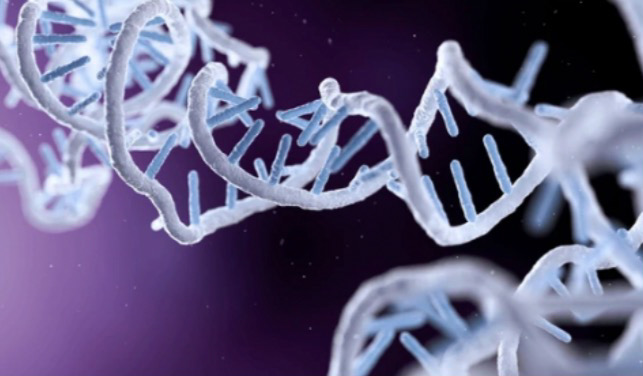

Two years ago, circular RNA was still easy to dismiss as a niche. In 2026, it’s harder — partly because the modality’s strongest advocates have built credible engineering stacks, and partly because big pharma has started to pay to own the upside.
It was cataloged in sequencing datasets and dissected in mechanistic reviews, yet rarely surfaced in institutional pipelines. That equilibrium is shifting.
As RNA therapeutics move beyond first‑generation mRNA, attention is migrating from expression speed to architectural control. CircNova is positioning itself squarely in that transition, framing NovaEngine as a sequence‑to‑structure design system intended to make circular RNA a programmable substrate rather than a passive format.
Circular RNA’s durability is widely accepted. Whether its architecture can be predictably directed — across targets, tissues, and immune contexts — remains the real test.
“Circular RNA is having its moment — not because it’s proven, but because the field is finally building the tooling to test it at scale.”
The Science That Makes Circular RNA Attractive — and Hard to Control
Circular RNAs (circRNAs) are RNA molecules that form covalently closed loops generated through back-splicing — a mechanism mapped in detail in one of the field’s foundational syntheses of circRNA biology, which cataloged formation pathways, regulatory roles, and translational uncertainties.
It’s a family of design decisions — how you synthesize, circularize, purify, and deliver; how you drive translation; and how you avoid immune tripwires.
What is less resolved is how consistently structure dictates function. A growing body of literature has clarified that secondary and tertiary motifs influence protein binding, intracellular localization, immune sensing, and translation efficiency. Recent analyses of translation mechanisms have reframed cap-independent initiation as a design variable rather than a biological exception, expanding the engineering toolkit within the contemporary literature on circRNA translation control. The closed topology confers resistance to exonuclease degradation, often extending half-life relative to linear transcripts. That stability advantage is empirically supported.
CircNova’s central wager is that those structural behaviors can be anticipated computationally before costly empirical iteration begins. If the modeling layer is reproducible across construct families, development cycles compress. If not externally benchmarked, the system remains directionally plausible but commercially unproven. vCircular RNAs (circRNAs) are RNA molecules that form covalently closed loops generated through back-splicing — a mechanism mapped in detail in one of the field’s foundational syntheses of circRNA biology, which cataloged formation pathways, regulatory roles, and translational uncertainties.
It’s a family of design decisions — how you synthesize, circularize, purify, and deliver; how you drive translation; and how you avoid immune tripwires.
What is less resolved is how consistently structure dictates function. A growing body of literature has clarified that secondary and tertiary motifs influence protein binding, intracellular localization, immune sensing, and translation efficiency. Recent analyses of translation mechanisms have reframed cap-independent initiation as a design variable rather than a biological exception, expanding the engineering toolkit within the contemporary literature on circRNA translation control. The closed topology confers resistance to exonuclease degradation, often extending half-life relative to linear transcripts. That stability advantage is empirically supported.
CircNova’s central wager is that those structural behaviors can be anticipated computationally before costly empirical iteration begins. If the modeling layer is reproducible across construct families, development cycles compress. If not externally benchmarked, the system remains directionally plausible but commercially unproven.
Capital Is Flowing Toward Circular RNA — But Precision, Not Promise, Will Define the Winners
The clearest signal in 2026 vthat circular RNA has moved beyond curiosity is capital behavior — especially when pharma is willing to pay for optionality. Flagship Pioneering’s launch of Laronde framed “Endless RNA” as a programmable expression modality, within that narrative, circularity constructs as a durable expression chassis capable of sustained protein production in outlining a next‑generation RNA architecture. Momentum accelerated further when Eli Lilly agreed to acquire Orna Therapeutics, engineered circular RNA paired with novel lipid nanoparticles for in vivo cell therapy concepts, in a transaction valued at up to $2.4 billion — a move interpreted across the industry as a modality‑level commitment rather than a single‑asset acquisition. Even so, contemporaneous analysis emphasized that late‑stage human validation remains limited despite growing strategic appetite for the format.
CircNova’s differentiation is narrower. It is not positioning itself as a delivery owner or vertically integrated therapeutic company. Its bet resides in the design layer: if structure prediction becomes measurably accurate and reproducible, it can function as a leverage point across pipelines.
The broader literature reinforces how high the bar is. Extended discussions of circular RNA vaccine research repeatedly treat purification and innate immune modulation as central variables when evaluating translational feasibility, while analyses of emerging RNA platforms continue to frame delivery physics and scalability as the ultimate constraints on the next wave of RNA therapeutics.
Design sophistication does not negate biodistribution reality.
NovaEngine’s pitch: make structure a first-class design variable
Early financing signaled investor willingness to fund the structural thesis, with attention drawn to the integration of modeling and wet‑lab validation, and regional capital participation underscored support for a computation‑led circular RNA strategy centered on structure‑first design.
Three measurable thresholds will determine whether that thesis hardens into platform value: externally benchmarked prediction accuracy, repeatable functional outputs across multiple constructs, and performance resilience under manufacturing and immune constraints.
CircNova is betting that the missing ingredient is not just better chemistry — it’s better prediction. The company argues that circular RNA’s 3D structure matters enough to treat it as a design variable, and that deep learning can help narrow the search space before molecules ever touch a bench. On a practical level, that claim is also a business strategy: if the platform can reduce experimental churn, it can sell both speed and focus in a modality where iteration costs are high.
The company framed NovaEngine as a native “transformer architecture” applied to RNA therapeutic data — essentially a model intended to learn design patterns across sequences, structures, and experimental outcomes. CircNova described the ambition in plain terms: customizable molecule design, supported by AI at multiple steps of discovery and development.
That’s a differentiator claim — and a risk. The AI part is easy to narrate and hard to validate from the outside, especially in a young company. The real question is whether NovaEngine becomes a genuine discovery engine or a convenient metaphor. In this corner of biotech, models don’t win on elegance. They win when experimental teams stop arguing with their outputs.
What CircNova is actually selling: sequence-to-structure-to-candidate
CircNova has referenced oncology, neurodegeneration, and rare genetic disease as areas of interest, but it has not disclosed a traditional, molecule-by-molecule pipeline — a posture consistent with early platform builders whose value proposition lies as much in design capability as in named assets. In its own description of NovaEngine as a sequence-to-structure system, the company frames circular RNA as an architectural variable rather than a delivery format, an ambition that sits within a broader field shaped by foundational work mapping circRNA biogenesis and function and by contemporary analyses of translation control that treat structural motifs as tunable inputs. Circular RNA has earned durability credibility, yet translational literature continues to emphasize purification standards and immune modulation as gating variables, while broader perspectives frame delivery physics and scalability as the ultimate constraints. The platform story therefore blends internal therapeutic exploration with partner-facing design capability, and will be judged less on stated disease targets than on reproducible structural performance.
Leadership, in that environment, becomes a matter of institutional coherence rather than personality. CircNova’s CEO Crystal Brown brings an operationally focused background aligned with the demands of platform translation: building infrastructure that converts modeling into proof. As circular RNA matures from academic momentum to capital-weighted scrutiny, the credibility test lies in benchmarking, evidence disclosure, and technical recruitment. For CircNova, the bar is not whether circular RNA lasts longer; it is whether structure can be engineered predictably enough to justify institutional confidence.
RNA Therapeutics Outlook: Translation Over Theory
The next phase of RNA therapeutics will be defined less by conceptual novelty and more by operational discipline: in vivo durability, dose control, manufacturing reproducibility, and regulatory clarity. By 2026, circular RNA will be judged on hard metrics — can it be manufactured consistently, dosed safely, delivered precisely, and produce sustained expression that meaningfully outperforms optimized linear mRNA or competing modalities? If controllable durability emerges within acceptable safety margins, circular RNA could reshape dosing paradigms in oncology and rare disease. If not, enthusiasm will recalibrate around more pragmatic architectures.
The first era of RNA proved nucleic acids can work. The second will test whether structural refinement extends that success. Capital has already signaled strategic appetite — when a company like Lilly commits billions to a circular RNA platform, the gravitational pull is immediate: more entrants, more capital, and a compressed timeline for proof. For CircNova, that dynamic is double-edged. It expands the market for circRNA design tools while raising the evidentiary bar. The most credible near-term wins are unlikely to be headline clinical data, but disciplined signals: a substantive collaboration, a partner program that demonstrates NovaEngine’s design utility, or a preclinical package that withstands regulatory scrutiny. If RNA architecture can be made computationally legible and operationally reliable, CircNova could help define what “AI-native RNA design” actually means.