
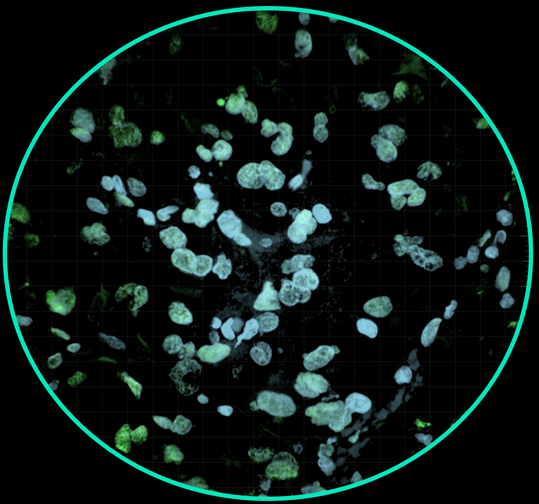

Treating cancer is complicated, lengthy, costly, and often significantly impacts the patient’s quality of life. What if there was a way to test drugs on a patient’s cancerous cells without administering the drug to the patient? Enter, Carcinotech. Carcinotech offers 3D printing of tumors made of the patient’s own cells. Having a 3D-printed tumor to test drugs on, perform targeted cell mutations, or irradiate means that the patient is not at risk of adverse reactions to these therapies. With this technology, patients’ oncologists are able to test what works effectively on their cells. But how does this work?
First, patients positively diagnosed with cancer send biopsy samples to Carcinotech, including blood, stem cells, tissue, and immune cells. Carcinotech then characterizes the patient’s biological material via genetic, molecular, and phenotypic assays. Using this data, Carcinotech’s scientists then replicate the patient’s biopsy cells and create a genetically identical tumor with the same microenvironment and immune system as the patient. This 3D-printed tumor is then segregated into well plates for testing.
Once the tumor cell line is created, Carcinotech will either ship the cryopreserved well plate to the physician or perform in-house assays and drug screenings. There are other “organoid” 3D cell models, but they take close to three months to be assay-ready. From receipt of cellular material to delivery of the sample, Carcinotech can have an assay-ready well plate made in just seven days.
The Benefits
Patients who have their tumors 3D printed experience significant harm reduction because cancer drugs, radiation, and other treatment options can be tested on the tumor tissue for efficacy, with a trial-and-error approach that would otherwise be tested on the patient. This broad-stroke approach, now being phased out with the help of Carcinotech, typically entails patients experiencing significant adverse side effects from treatment with no guarantee of improvement in disease pathology.
The ability of researchers to test potential drugs on living human tumor cells will significantly aid in the development and commercialization of cancer drugs, speeding up the timeline for discovering a cure for cancer. Experimenting on this tissue type reduces variability in large-scale testing by standardizing variables and controls for experimental procedures. It is also used as a training asset, allowing medical students to work with real in vivo samples. Due to the increased testing speed, development costs are expected to plummet, significantly improving research output.
Testing tumor material in this way cuts down on the need for animal testing, removing many of the ethical barriers to clinical trials. This approach also allows for the collaboration of clinicians across continents because it can be shipped anywhere in the world.
Carcinotech’s CEO, Ishani Malhotra, started her journey at the People’s Education Society University in Bengaluru, India, where she received a Bachelor of Engineering in Biotechnology, graduating in 2016. She immediately began her next program at the University of Edinburgh, graduating in one year with a Master of Science in Regenerative Medicine.
It was during her research at Edinburgh that she started working with induced pluripotent stem cells for the first time, converting skin fibroblasts into iPSCs. Continuing her work in disease modeling and regenerative medicine, she worked as a stem cell scientist at Censo Biotechnologies, setting up 3D cultures with cancer stem cells. While working at Censo and completing a certificate in cancer genetics from Harvard, she founded her company, Carcinotech, in July 2018.
Since Ishani founded her company, she has scaled her company significantly and won several awards and recognitions, including:
- AccelerateHer Science and MedTech 2022
- Scotland 35 Rising Stars under 35 2022
- Scottish SME Business Entrepreneur of the Year 2022
- GHP International Life Science Best 3D Printed Tumor MedTech Company 2022
The Future
Ishani believes that the next step in rolling out this project is reducing the manufacturing cost in order to make their product more commercially available. To that end, in October 2023, Carcinotech announced two new partnerships.
One partnership is with CELLINK, with goals to develop and commercialize the tumor models. Carcinotech previously partnered with CELLINK in 2020, working together to enhance bioprinting technology by combining CELLINK’s unique extracellular matrix and bioinks, with Carcinotech’s tumor replication expertise to create a more realistic model that behaves like human tissue would. We have high expectations for what their next partnership will yield.
The other partnership is with PharmaCorp, a clinical research and trial site aiming to fast-track drug discovery, research, and clinical trials. So far, the partnership has produced innovation in targeted drug delivery (with significantly improved efficacy rates of up to 80%) and advances in immunotherapy for more dynamic disease modeling.
Both of these partnerships mark the beginning of Carcinotech’s foray into commercialization and a monumental improvement in R&D for drug discovery.